Humans Are Becoming Computers: The Merging of Mind and Machine
Introduction
For centuries, humans have built machines to extend their physical and cognitive limits — from levers and steam engines to smartphones and AI models. But in the 21st century, something far more radical is happening. The tools we once used externally are now beginning to merge with us, blurring the line between mind and machine.
We are no longer just users of technology — we are slowly becoming part of it.
For centuries, humans have built machines to extend their physical and cognitive limits — from levers and steam engines to smartphones and AI models. But in the 21st century, something far more radical is happening. The tools we once used externally are now beginning to merge with us, blurring the line between mind and machine.
We are no longer just users of technology — we are slowly becoming part of it.
The Convergence of Brain and Machine
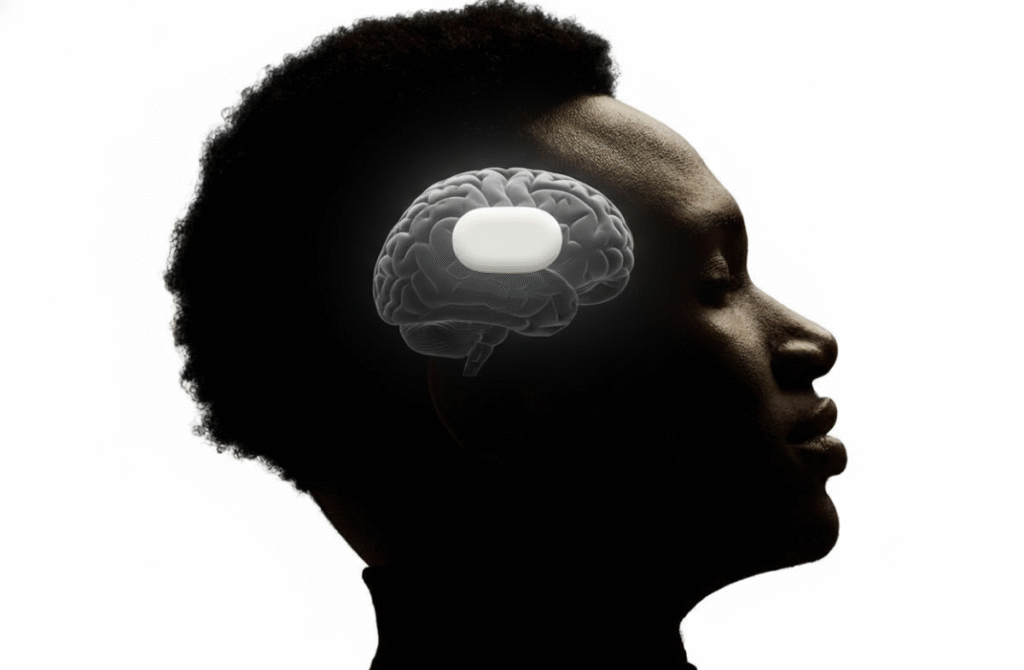
Neurotechnology, brain-computer interfaces (BCIs), and neural implants are making it possible to directly connect human thought to digital systems. Companies like Neuralink, Synchron, and Corti are pioneering interfaces that decode neural signals to control computers, prosthetics, or even generate speech from thought.
This is the birth of a new kind of human-computer interaction — not through clicks or voice, but through cognition itself. Your brain, in essence, becomes the CPU; your thoughts, the commands.
As these technologies evolve, humans will no longer need to “use” computers. They’ll become nodes in a vast cognitive network, seamlessly connected to digital intelligence.
This is the birth of a new kind of human-computer interaction — not through clicks or voice, but through cognition itself. Your brain, in essence, becomes the CPU; your thoughts, the commands.
As these technologies evolve, humans will no longer need to “use” computers. They’ll become nodes in a vast cognitive network, seamlessly connected to digital intelligence.
AI as the Cognitive Extension of Humanity
Artificial Intelligence is already performing complex reasoning, creativity, and decision-making tasks that once defined human intelligence. But the real transformation begins when AI stops being an external tool and becomes an internal augmentation — an extension of thought.
Imagine AI models personalized to your mind: learning your behavior, predicting your decisions, and assisting you before you even ask. This is not science fiction — early cognitive copilots like OpenAI’s GPT-based Assistants, Google’s Gemini, and Anthropic’s Claude are moving us closer to shared intelligence — a world where human intention and AI execution merge in real time.
AI will not just answer queries — it will amplify consciousness
Imagine AI models personalized to your mind: learning your behavior, predicting your decisions, and assisting you before you even ask. This is not science fiction — early cognitive copilots like OpenAI’s GPT-based Assistants, Google’s Gemini, and Anthropic’s Claude are moving us closer to shared intelligence — a world where human intention and AI execution merge in real time.
AI will not just answer queries — it will amplify consciousness
Immersive Simulations and Synthetic Realities
Parallel to neurotech, immersive simulation environments — powered by AR, VR, and spatial computing — are reshaping perception itself. The boundary between physical and digital spaces is dissolving as humans begin to live, learn, and socialize in persistent virtual environments.
Platforms like Apple’s Vision Pro, Meta’s Horizon Worlds, and Nvidia’s Omniverse are laying the foundation for what could evolve into synthetic existence — where our avatars, memories, and creative outputs persist even beyond physical presence.
In such worlds, consciousness and computation intertwine. The environment becomes interactive, adaptive, and deeply personal — a reflection of your mind’s digital twin.
Platforms like Apple’s Vision Pro, Meta’s Horizon Worlds, and Nvidia’s Omniverse are laying the foundation for what could evolve into synthetic existence — where our avatars, memories, and creative outputs persist even beyond physical presence.
In such worlds, consciousness and computation intertwine. The environment becomes interactive, adaptive, and deeply personal — a reflection of your mind’s digital twin.
The Neural Operating System of the Future
Imagine a future where every individual has a personal neural OS — a hybrid of biological neurons and synthetic intelligence. It will interpret sensory data, enhance focus, regulate emotions, and connect seamlessly to AI-driven knowledge systems.
This “Human-AI Operating System” will continuously learn, upgrade, and evolve — much like today’s software — but running on a biological substrate. It won’t just process data; it will process reality itself.
Such a system could redefine healthcare, creativity, and communication — enabling humans to share experiences, thoughts, and emotions at the speed of light.
This “Human-AI Operating System” will continuously learn, upgrade, and evolve — much like today’s software — but running on a biological substrate. It won’t just process data; it will process reality itself.
Such a system could redefine healthcare, creativity, and communication — enabling humans to share experiences, thoughts, and emotions at the speed of light.
Ethics, Identity, and the Soul in the Machine
As humanity integrates deeper with machines, we must confront profound ethical and existential questions. If your thoughts can be decoded, who owns them? If your memories are backed up, are you still “you”? If your intelligence is amplified by AI, where does your individuality end and algorithmic influence begin?
The merging of mind and machine demands not only technical breakthroughs but philosophical maturity — ensuring that we retain our sense of self, purpose, and empathy in an increasingly synthetic world.
The merging of mind and machine demands not only technical breakthroughs but philosophical maturity — ensuring that we retain our sense of self, purpose, and empathy in an increasingly synthetic world.
The Road Ahead
We are witnessing the dawn of Computational Humanity — a new evolutionary phase where biological intelligence fuses with artificial cognition. This transformation won’t happen overnight. It will unfold gradually — through neural augmentation, digital twins, agentic systems, and brain-level AI integration.
But one thing is certain: The computers of the future won’t sit on our desks or in our pockets. They will exist within us.
But one thing is certain: The computers of the future won’t sit on our desks or in our pockets. They will exist within us.
Closing Note
The question is no longer whether humans will merge with machines — but how we will preserve our humanity when we do. The future of intelligence is not artificial. It is symbiotic.
Written by Sai Kumar Danam — exploring the intersection of neurotech, AI, and human evolution.
Written by Sai Kumar Danam — exploring the intersection of neurotech, AI, and human evolution.